Political opinion with Alison Bennett MP: Lessons we cannot ignore
Last Thursday, the Prime Minister came to Parliament to apologise on behalf of the state for its role in historical forced adoptions in England and Wales, where around 185,000 babies were taken from their mothers during the 1950s, 1960s and 1970s. It was an emotional moment, and his apology was an important acknowledgement of a profound injustice. However, as I said in response to his statement, the lessons cannot stop there.
Last week alone, Parliament debated not only forced adoption but also the legacy of Diethylstilbestrol (DES) and the findings of Baroness Amos’s report into maternity services in Sussex. While these are very different issues, they share a troubling common theme: women being dismissed, ignored or not believed at some of the most vulnerable moments of their lives.
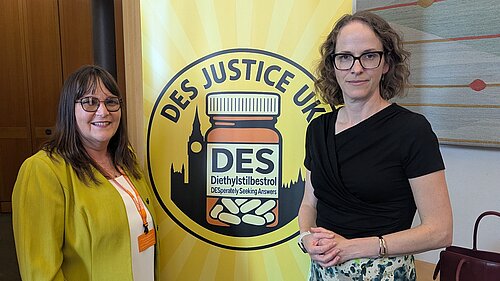
On Monday, I was honoured to meet with my Mid Sussex constituent Heather again, one of the DES Daughters and Granddaughters who came to Parliament as part of the DES Justice campaign. Before meeting Heather at a recent surgery, I had never heard of DES, a synthetic hormone prescribed to an estimated 300,000 women in the UK from the 1940s until the early 1980s. Marketed as a treatment to support pregnancy and prevent miscarriage, DES was later linked to serious health consequences for women, their children and even their grandchildren.
Through the determination of Heather and others in the DES Justice campaign, along with the courage of those sharing their experiences, this hidden issue has been brought into the public eye and into Parliament. I was proud to place on record in the House of Commons my gratitude to all those campaigning for greater awareness, support and recognition for those affected. I was pleased that the Minister also took the opportunity to recognise the work and contribution of Heather and the other campaigners.
Taken together with the experiences of women affected by forced adoption and the findings of Baroness Amos’s report, these issues raise difficult but necessary questions. That is why I asked the Government what further action it will take to tackle the misogyny that has enabled such injustices and to ensure women are treated with the dignity, respect and compassion they deserve. Acknowledging the past matters, but meaningful change depends on what we do next.