Naming reality
Hello, and welcome…
…if you are new to my Monday Mail.
I have had lots of new people sign up to receive my newsletter over the last week as a result of what I have been saying about social media and our children.
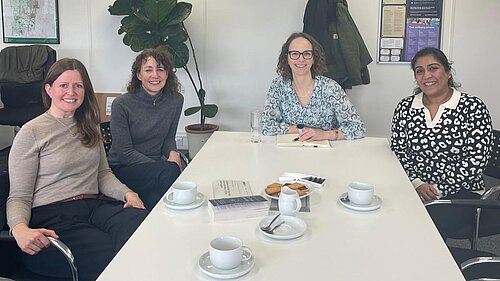
Thank you for sharing your concerns about social media with me via email or via my survey. If you haven’t yet completed my social media survey, please do - there is still time to share your views. What you have told me so far has been fascinating, and it has led to some valuable conversations and meetings, not least with Anna - a child development doctor - and her colleagues. Anna kindly gave me a copy of The Anxious Generation by Jonathan Haidt. I think what has enriched my understanding of the challenges facing our children is that Haidt argues that a lack of protection in the virtual world went hand in hand with parenting becoming overly cautious about the physical world. Children have switched from a play based childhood to a mobile based one and with it their anxiety levels have soared.
Naming reality - part one
On the recommendation of my friend Fiona, I have listened to an episode of the BBC podcast Radical, with Amol Rajan. Rajan’s interviewee is Louise Allen who discusses how to address the crisis in fostering. A programme that is ostensibly about looked-after children linked to the challenges these children face because of the same rising reliance on technology.
I did not know until I listened to the interview that the number of children in care is just about the highest it has ever been. You can see in this chart that it dropped off slightly last year from a peak in 2024. During the course of their discussion, Louise Allen argues that one of the causes of such high numbers of children needing to go into care is because phone use is getting in the way of children’s development.
Over the last year, I have had a number of conversations with professionals from across Sussex, and they make the same point that Louise Allen makes. Whether it’s GPs, headteachers or paediatric specialists, they are meeting children who have been given tech in infancy, have never had a parent who gives them boundaries or the chance to play outside, and they all tell me how shocking it is that this is a commonplace experience in their work.
Last week the government announced a consultation on the use of social media for children. However, I am increasingly of the view that the challenges posed by tech are not limited to whether children should or should not have access to some apps on a phone. Mobile technology is profoundly shaping the whole experience of being a child and for that matter being a parent. The question is how we as a society shift the dial so that the harms those health and education professionals are witnessing day to day can be brought to an end. The first step towards that is naming this reality, and I am grateful to everyone who is helping do just that.
Naming reality - part two
I was alerted to Canadian Prime Minister Mark Carney’s speech at the World Economic Forum in Davos first by Ian Sollom, a Lib Dem colleague, and then by my mum. When stuff in the news passes the ‘mum test’ it is probably worth paying attention, and I would encourage you to do the same.
You can watch the speech here (the first minute is in French but then Carney switches to English).
Carney named the reality of world security as it stands today. It was a dose of reality against the backdrop of Trump threatening to invade Greenland and impose tariffs on the US’s own allies. Carney identified the weaknesses of the ‘international rules based order’, and he powerfully made the case that sovereignty for countries like Canada and the United Kingdom will increasingly be grounded in our ability to withstand pressure from more powerful nations.
The Liberal Democrats have been firmly of the view that we must stand up to Trump, and Carney’s speech sets out eloquently why this is imperative. One area where we as a country must be able to demonstrate autonomy is in our ability to defend ourselves. This will require us to increase our spending on defence, but in an economy with an ageing population, rising demand for public services, a cost of living crisis and already high taxation, how we pay for this is acutely challenging.
Yesterday, Ed Davey set out our plans to create ‘defence bonds’ that would raise £20 billion for capital spending in the defence sector. As well as going towards addressing the serious national security threat that we face, it would also help grow the economy too - something that is also sorely needed. The BBC has an article on our ideas here.
Getting in touch
My parliamentary email address is: alison.bennett.mp@parliament.uk. If you need my help, please get in touch.
Best wishes,
Alison
PS: If you’ve enjoyed this week’s Monday Mail, please spread the word and tell your friends by forwarding it to them. Anyone can sign up here.