Alison's speech at the Planning Inspector's hearing
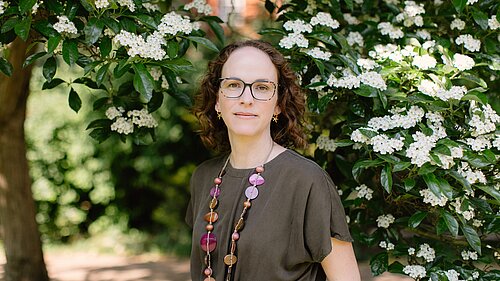
On 3rd November, Alison spoke at the Planning Inspector’s hearing on the Main Modifications of the Mid Sussex District Plan. Below is a copy of her speech:
Thank you Mr Bore.
I am grateful to have the opportunity to address the hearing today.
I’m also wish to put on record my gratitude to those who have worked diligently and in good faith to develop the draft plan over many years.
It is not an easy task, and frankly I fear it is a thankless one.
--
Let us be clear, Mid Sussex is a planning authority that has done everything that has been asked of it in planning terms.
It has planned for growth, it has allocated sites, and it has seen those sites built on.
As a result, we have had the highest population growth anywhere in Sussex.
Between the last two censuses our population grew by more than 9%, well ahead of both the South East, and England as a whole.
This is a district that has stepped up, year after year.
--
And yet… the Main Modifications now ask Mid Sussex to go further still.
The plan's requirement has risen to more than 24,000 homes. Close to 4,800 of those are there to meet the unmet need of our neighbours – chiefly Crawley and Brighton & Hove.
I understand the pressure those authorities are under. But Mid Sussex's previously adopted Plan made a contribution of approximately 1,500 dwellings towards unmet need arising in Crawley.
Whilst Mid Sussex shares a Housing Market Area with Crawley. It has no equivalent commitment to Brighton & Hove, and the scale of need on the coast combined with the repeated need for Mid Sussex to pick up Crawley’s unmet need points to the requirement for a bigger strategic answer, not one more round of allocations on Mid Sussex's green fields.
These asks are certainly unfair in the eyes of my constituents, but there is another more fundamental consideration.
--
Mid Sussex sits in the most water-stressed part of the country.
The Environment Agency itself describes the South East as ‘seriously water-stressed’, meaning every available water source is already in use.
Our residents live with the consequences.
We have had a hosepipe ban in place for around ten of the last sixteen months.
We are now officially in severe drought.
As things stand South East Water has secured permission from the government for a Non Essential Use ban, which if brought into force would mean that commercial and business users would be severely restricted in the water that they can use to trade.
Evidently this would be damaging for the web of small and medium sized businesses that constitute the economy of Mid Sussex.
South East Water currently believe that they will not need to go that far, but I must speak plainly about how close to the edge we are:
We were looking at the prospect of standpipes on our streets in December.
That date has been pushed back to the winter of 2027 because the Environment Agency has granted South East Water a significant temporary licence variation via an extension of their Drought Permit powers.
That license variation cuts the water released from Ardingly into the Shell Brook, a tributary of the Ouse, from 4 million litres a day to 1.
It also lowers the flow that must be left in the Ouse at Barcombe Mills.
Protecting the public water supply is the right priority – but it comes at a cost to the river and the wildlife that depend on it.
Even then, the Environment Agency has warned that the permit on its own will not secure supply. Buying a few weeks by lowering flows in the river is not resilience…
It is not sustainable.
_ _
And the network itself is failing.
At the start of October, a burst main left around 5,000 properties in Hurstpierpoint, Burgess Hill and Hassocks without water, with more than a thousand still cut off the next day. Families queued for bottled water at Tesco in Burgess Hill.
But the October outage in Burgess Hill is just one example of a failing system. During this year every corner of the district has experienced something similar:
East Grinstead,
Haywards Heath,
Staplefield,
Hassocks,
Cuckfield.
Right across the District water outages are harming businesses, impacting the vulnerable in care homes, closing schools and making the lives of my constituents a misery.
Adding thousands more homes to an area that is already struggling to supply its existing population is clearly a massive risk to people's safety, and to the viability of new homes as liveable, even if they were built.
--
That is why I cannot, in good conscience, support any of the additional sites set out in the Main Modifications while the district's water supply has so little resilience.
_ _
I also want to speak up for the councillors who represent communities right across my constituency. The direction from the Labour Government, through the Planning Inspectorate, to add these homes has put them in an invidious position.
They know that without an adopted plan, the presumption in favour of sustainable development applies, and speculative applications will follow.
But they also know that these additional allocations are not sustainable. Not on water, and not on traffic, schools, GP surgeries and the rest of the infrastructure that new communities need.
They should not be forced to choose between a plan they know is unsound on the ground and no plan at all.
--
The water problem applies to every one of the new sites. But I want to turn to some in particular.
First, MM60, MM74 and MM76: land east and west of Malthouse Lane, land north of Willow Way and Talbot Mead, and land north east of Hurstpierpoint. Many of these homes would sit in the very area that lost its water supply in October.
And it’s not just drinking water. It is sewage too.
When Southern Water's sewers burst south of Jane Murray Way, sewage had to be diverted into the sewers in another part of the network with a major tankering operation required for many weeks.
I have received a great many objections from residents of both Burgess Hill and Hurstpierpoint. These sites would narrow the gap between the two settlements to the point of coalescence.
And they would load more traffic onto College Lane and Malthouse Lane – narrow country lanes already busy with traffic .
Second, MM72, MM73 and MM75: land east of College Lane, and land south of Hurst Wickham Barn. Here the gap at risk is the one between Hurstpierpoint and Hassocks, and the same narrow lanes would take the strain.
Third, MM71, land west of Ockley Lane, which would erode the gap between Burgess Hill and Hassocks. Taken together with the Hurstpierpoint sites, the separate identities of these communities would be at real risk.
Fourth, MM92, West House Farm at Sayers Common. This would bring further coalescence between Sayers Common and Albourne, on top of what the draft District Plan already proposes.
Finally, two sites in Haywards Heath where the case is about nature. At MM66, North Colwell Farm, there are hazel dormice and several species of bat. At MM67, north of Old Wickham Lane, residents have recorded black redstart, a Schedule 1 protected species with fewer than a hundred breeding pairs in the whole of the UK, along with slow worms, two species of woodpecker, buzzards, sparrowhawks and red kites.
Several birds of prey in one place tell us this is undisturbed habitat with a working food chain. Once it is built over, it does not come back.
--
I’d like to finish by reiterating in the clearest terms that Mid Sussex has done its part. It has planned, it has built, and it has grown faster than anywhere else in Sussex.
What it cannot do is conjure up water that is - not - there.
We are at the very sharp end of a failing water industry, in the most water-stressed part of the country, in a severe drought, reliant on a single inadequate reservoir with a river being drained to keep the taps running.
In those circumstances, allocating thousands more homes without ensuring adequate infrastructure would be irresponsible.
I respectfully call on the Inspector to think again about the wisdom of pushing more housing into this district, and to remove these additional allocations from the plan.
Thank you.