Alison Bennett's Monday Mail: Conversations
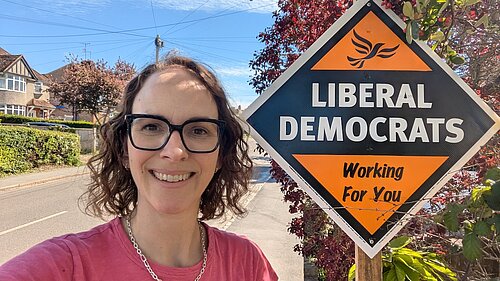
Doorstep Conversations
We’re in the run up with the county council elections, with polling day a week on Thursday. This means that I am spending a fair bit of my time on the doorstep talking to residents. I am not exaggerating when I say that about one in every three people will raise the state of the roads as a key concern for them.
For many it is a daily annoyance making journeys uncomfortable and slower, sometimes it is more serious than this. For cyclists especially, it poses a real danger. It is costly too of course, and I have been told that one local mechanic estimates that this winter about ten per cent of his trade has been repairing pothole damage. If this has happened to you, do bear in mind that you have the right to claim for the cost of repairs from the relevant highways authority.
During some doorstep conversations, people will say that there are more important things than potholes, and I agree. Climate change, and war being two very obvious examples, but I also think that the condition of our roads is the bit of the public realm that we all experience every time we leave the house, that’s why people notice it and want it fixed.
For me though, the condition of the roads is emblematic of the state of many other public services that - if we are fortunate - we do not usually have to experience. One example would be the condition of our prisons which is horrifying. The estimated £1.8 billion maintenance backlog does not just affect prisoners and staff, it has an impact on rehabilitation and reoffending rates which affects law abiding citizens too. I would argue though that it is rare to find someone (a politician or a voter) making the case that their taxes should go into refurbishing the prison estate ahead of repairing the roads.
I sometimes wonder how much Meta is listening in to our conversations, and maybe this explains why this week my Facebook algorithm served me up a Cambridge University article entitled: Fixing the roads. How tolls saved Britain from pothole hell in the Industrial Revolution. Given the amount of time I am spending talking about potholes, this clickbait piqued my interest.
If you were not aware, turnpike roads were established through acts of Parliament whereby a trust of local people raised money to improve and repair a stretch of road. They then had the right to collect tolls from travellers to recoup those costs. The research analysed travellers’ diaries and established that the creation of the turnpike system was credited by those diarists with making journeys quicker, more pleasant and safer. This got me wondering about the history of turnpike roads in Mid Sussex. I already knew from visiting the Cuckfield Museum that the village was the final place to change the horses on a journey from London to Brighton and a little Googling revealed that the Burgess Hill History and Heritage Association have looked at the turnpike road from Lovell Heath (Lowfield Heath near Gatwick Airport) via Crawley, Pease Pottage, Handcross, Cuckfield, Anstye Cross, St. John’s Common, Clayton and Brighton which ran right through what is now the constituency of Mid Sussex.
For the avoidance of doubt, reintroducing turnpike roads is not Lib Dem policy, but it has got me thinking.
At present people pay Vehicle Excise Duty (Road Tax), Fuel Duty and Council tax, and in return they are not getting road surfaces that are fit for purpose. The old turnpike system meant that only road users paid for the maintenance of the roads they used, and if you did not travel you did not pay. In theory fuel duty should perfectly reflect the amount each person uses the roads, but this tax is not hypothecated (allocated to a specific use in this case road maintenance) because Fuel Duty receipts go into a general taxation pot. As the switch from petrol and diesel vehicles to EVs happens, the Treasury is going to lose the revenue from fuel duty and will need to think of a way to make up for those lost tax receipts.
As we move toward a future with new technologies and changing demands on our infrastructure,we need to be honest about the challenges this presents and put long-term thinking ahead of short-term fixes. If we can get this right, we can restore trust that when people pay in, they genuinely see the benefit in the services they use.
Surgery conversations
Last Friday I held one of my regular advice surgeries. This time it was at Haywards Heath Town Council’s offices. Conversations in surgeries can be wide ranging, and Friday’s appointments were no exception. I got talking to one couple about housing policy, its many shortcomings and why we are where we are. During our conversation I mentioned a couple of articles that I have read that I have found helpful. I thought that I would share the links here, so that if I mention them in future conversations, I can point people to this newsletter to find the links.
First up, is an article on the Works in Progress website entitled, Why Britain Doesn’t Build. Apologies, this is a long, long read. It examines government housing policy since WWII, and its many failures, setting out why we haven’t built enough houses to keep up with demand for a very long time.
Secondly, if you have never considered what happens when not enough houses are built, beyond the obvious of not being able to afford to live where you want to, then The Housing Theory of Everything will open your mind.
Finally, and I think I have shared this here before, Tenants by Vicky Spratt goes into some of the history covered by the previous two articles, and also looks at what happens when people are living in insecure, unsuitable or overcrowded housing.
I have many criticisms of the current development sector and the planning rules that sit around it. Not least the failure to secure reliable supplies of tap water to support a growing population but as someone who has always valued the instructive power of history, understanding how we got to our current predicament matters.
A conversation on a bench
A couple of weeks ago I had a conversation with Sunday Times journalist Matt Rudd on a bench by the village pond in Lindfield. You can read Matt’s article online but you will need a Times subscription.
Getting in touch
My parliamentary email address is: alison.bennett.mp@parliament.uk. If you need my help, please get in touch.
Best wishes,
Alison
PS: If you’ve enjoyed this week’s Monday Mail, please spread the word and tell your friends by forwarding it to them. Anyone can sign up here.