Keeping Children Safe Online
In June 2026, the Government announced plans to introduce a blanket ban on social media use by under-16s, following growing concern about children’s wellbeing online.
Over recent months, parents, teachers, doctors and young people themselves have been in contact with Alison to share their thoughts about the impact of social media use on children and young people
This page sets out Alison’s work on this issue, the Liberal Democrat approach to keeping children safe online, and the latest developments as the policy progresses.
Liberal Democrat approach
Alison and her Liberal Democrat colleagues have long argued for stronger protections for young people online. They have consistently called for tech companies to take action to remove harmful content posted online and dismantle the addictive algorithms which reward the most extreme content and are designed to encourage endless scrolling at the expense of their mental and physical health.
Liberal Democrats believe that action is rightly needed to protect young people online. However, Alison is concerned that the Government's proposed blanket ban fails to address the root of the problem, the addictive algorithms and harmful content that social media companies have been allowed to profit from without being properly held to account.
Rather than requiring platforms to reform and clean up their services, the proposals risk allowing big tech companies to escape responsibility for the harms their platforms create.
To this end Alison and the Liberal Democrats are calling for a film-style ratings system for social media platforms. Under this approach, platforms would be assessed according to the content they host and given age ratings similar to those used for films. Platforms that expose users to harmful or inappropriate material could receive a 16 or 18 certificate, while safer platforms would be accessible to younger users.
Over 40 charities and experts, including the Molly Rose Foundation and NSPCC, have called for an approach such as ours which sets minimum age limits based on social media platforms functionalities and the harms they pose.
This approach would create a strong incentive for technology companies to improve their platforms, ensuring responsibility lies with the companies themselves rather than allowing them to continue operating without necessary reform.
The Children’s Wellbeing and Schools Bill
In February, the Liberal Democrats were the first party to force a vote in the House of Commons on stronger protections for children online through the Children’s Wellbeing and Schools Bill. This included proposals for a film-style ratings system to help parents and young people better understand the risks associated with different types of online content.
Unfortunately, our amendment did not secure sufficient cross-party support. As a result, the Bill passed without those provisions.
What is happening now?
After months of delay, the Government has now announced plans to introduce a complete ban on social media use for under-16s, moving away from earlier discussions and the consultation launched in January towards a full blanket ban.
Instead of rushing through a blunt and untested policy, the Liberal Democrats will continue to urge the Government to take a more effective approach based on evidence that genuinely improves online safety for children. Lessons from countries such as Australia, which the Government has cited as a model, should be properly considered, with far greater thought given to how these policies operate in practice. We will continue pushing for meaningful regulation to drive change in the behaviour of big tech.
Alison and her Liberal Democrat colleagues will continue pushing for meaningful regulation that drives change in the behaviour of big tech companies, rather than allowing them to avoid responsibility for the harms their platforms create.
The Government has indicated that the policy will be implemented by Spring 2027. Alison and her colleagues will continue to scrutinise the proposals closely and press for a stronger, more accountable approach to protecting young people online.
Alison’s actions
Alison has taken a number of steps to listen to young people, parents and professionals, and to press Ministers for action:
- Alison held a roundtable with local child development doctors who work directly with young people, to discuss the increasing issues they are seeing in their clinics. They discussed the impact of social media, including the increasing number of children who are dependent on screens, struggling to cope with daily life and in some cases, refusing to attend school.
- Alison asked parents and young people to share their views on social media via a survey. Hundreds of local residents shared their views in January and February on how best to protect young people online.
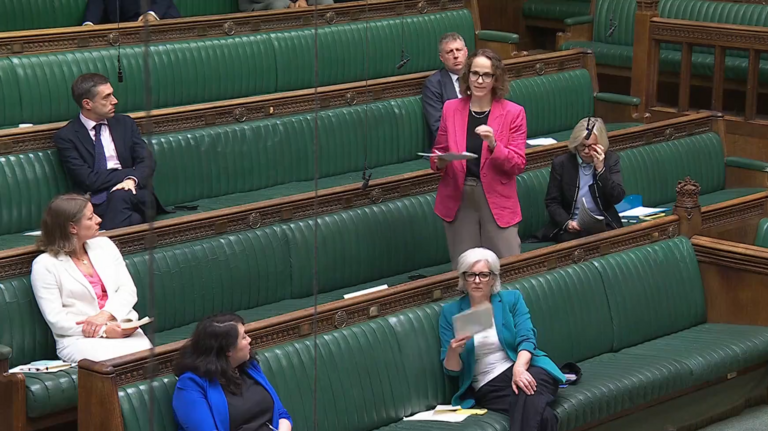
- In January, during a debate on the use of mobile phones and social media by children, Alison pressed the Minister on when action would be taken. You can watch her contribution here.
- Alison spoke with School Captains at Oathall Community College about the role social media plays in their lives. While these students recognised the negative aspects of the online world and the need to reduce screen time, they were sceptical about the effectiveness of an outright ban.
- Alison shared the views of the Burgess Hill Youth Council on the proposed ban with the Secretary of State for Education, Bridget Phillipson MP, to ensure their voices were heard and reflected in the policy discussion.
- Following the Government’s announcement that they will introduce a social media ban, Alison asked the Secretary of State for Science, Technology and Innovation what proportion of under-16s the Government expects to be stopped from accessing social media.
- In June, Alison spoke with BBC Radio Sussex to discuss the Government’s proposed blanket ban and the Liberal Democrat’s nuanced calls for a social media ban, calling for film-style ratings, to urge social media platforms to take initiative and do their duty to protect young people online.
Alison will continue to listen to young people, parents, schools and experts in Mid Sussex, and will keep pressing the Government to bring forward practical, effective measures that make children safer online.